 how-to
Can Texas Remote Care Teams Protect Patient Privacy in 2026?
Last Updated: October 27, 2026
Quick Summary
Managing remote care privacy in Texas requires more than HIPAA, because the Texas Medical Records Privacy Act reaches further than federal law in several areas. Build a telehealth privacy risk assessment, apply encryption and multi-factor authentication to ePHI, vet vendors with business associate agreements, and prepare a written incident response procedure covering both state and federal breach notification tracks.
- Map every system that touches patient data, rate each risk, and assign a fix and owner.
- Require encryption, multi-factor authentication, and role-based access controls on systems holding patient records.
- Ask each telehealth vendor whether it will sign a business associate agreement and provide an independent security audit.
- Remote staff should use a private room, a headset, and a privacy screen during visits.
- A single incident can require two separate notification workstreams under state and federal rules.
Table of Contents
- Why Remote Care Privacy in Texas Requires More Than HIPAA
- Step 1: Build a Telehealth Privacy Risk Assessment Before Your First Virtual Visit
- Step 2: Apply Telehealth Data Security Best Practices to ePHI
- Step 3: Run a Telehealth Vendor Security Checklist Before You Sign
- Step 4: Draft Telehealth Consent Form Privacy Language That Holds Up
- Step 5: Set Up Home-Based Care Privacy for Remote Staff
- Step 6: Prepare an Incident Response and Breach Reporting Procedure
- Book a Consultation to Review Your Remote Care Privacy Workflow
- Frequently Asked Questions
Why Remote Care Privacy in Texas Requires More Than HIPAA
Managing patient privacy in Texas remote care settings takes more than a federal checklist. HIPAA sets the floor, but Texas adds its own layer of rules on top. A federal compliance program may not cover every applicable requirement.
The Texas Medical Records Privacy Act is a state law that governs how health care providers handle patient records, and it reaches further than HIPAA in several areas. That gap catches practices off guard.
Federal guidance from HHS on telehealth privacy and security confirms HIPAA applies to virtual visits like any other encounter. State law still runs alongside it.
How the Texas Medical Records Privacy Act and HB 300 Interact With HIPAA
For a fuller walkthrough, read our guide to the Texas Medical Records Privacy Act.
Step 1: Build a Telehealth Privacy Risk Assessment Before Your First Virtual Visit
A telehealth privacy risk assessment is a documented review of where patient data flows in a remote care setup and where it could be exposed.
Work through these steps:
- Map every system that touches patient data, from scheduling to video to billing.
- List where data is stored and who can reach it.
- Note each point where data leaves your control.
- Rate each risk by likelihood and harm.
- Write down a fix and an owner for each gap.
Step 2: Apply Telehealth Data Security Best Practices to ePHI
Electronic protected health information needs safeguards that match the risk. The HHS Security Rule guidance frames these as administrative, physical, and technical safeguards. For remote care, the technical ones do the heavy lifting.
Encryption, Multi-Factor Authentication, and Role-Based Access Controls
Consider these controls:
- Encryption for data in transit and at rest
- Multi-factor authentication on every system that holds patient records
- Role-based access controls so staff see only the records their job requires
Add audit logging and access monitoring. If someone opens a record they should not, you want a trail. For a deeper checklist, see our telehealth data security best practices.
Step 3: Run a Telehealth Vendor Security Checklist Before You Sign
A telehealth vendor security checklist is a set of questions you ask a platform, storage, or communication vendor before patient data touches their system.
Ask each vendor:
- Will you sign a business associate agreement?
- Is data encrypted in transit and at rest?
- Where is data stored, and who can access it?
- Do you support multi-factor authentication and role-based access?
- How do you notify us of a breach, and how fast?
- Can you provide an independent security audit?
Our guide to secure telehealth vendor selection covers the full review.
Step 4: Draft Telehealth Consent Form Privacy Language That Holds Up
Telehealth consent form privacy language tells patients how their data is collected, used, shared, and stored during remote care.
Your consent form should spell out:
- What technology the visit uses and its known privacy limits
- How records are stored and who can access them
- When information may be shared and with whom
- The patient's right to access their records and how to request them
- How a patient can withdraw consent
Use plain language.
Step 5: Set Up Home-Based Care Privacy for Remote Staff
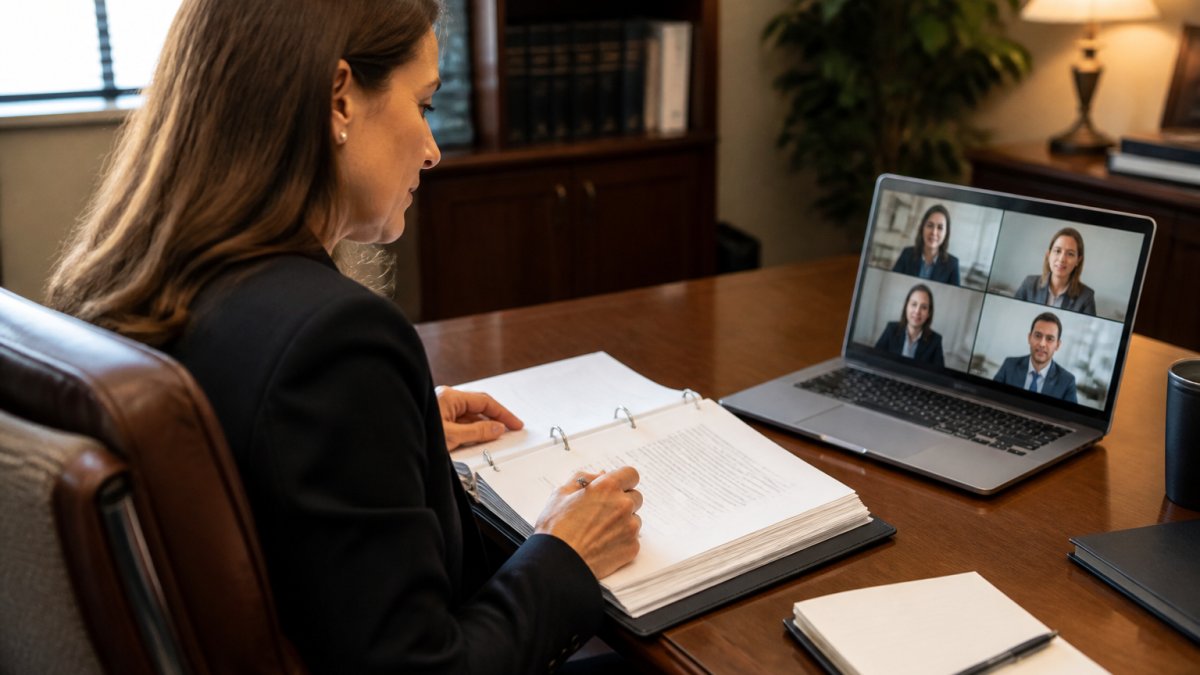
Home-based care privacy means controlling the physical and digital space where a clinician does remote work. A kitchen table is not a private exam room.
Set clear rules for remote staff:
- Use a private room with a closed door during visits
- Wear a headset and use a privacy screen on the laptop
- Keep family and visitors out of earshot and camera view
- Lock screens when stepping away
- Never use personal email or messaging apps for patient records
Training matters here.
Step 6: Prepare an Incident Response and Breach Reporting Procedure
An incident response procedure is a written plan for what your team does the moment a privacy breach is suspected. A written incident response procedure can help a practice prepare for a suspected privacy breach.
The Two Notification Tracks You Are Managing
- State track. Texas has its own breach reporting requirements under the Medical Records Privacy Act and related identity-theft statutes. These can require notice to the Texas Attorney General and can set their own timing and content expectations. The recipients and deadlines are not identical to the federal ones, so a single incident can require two separate notification workstreams.
A Response Checklist You Can Actually Run
Build the procedure so each step has a named owner and a backup:
- Detect and report. Define what counts as an incident, a misdirected email, a lost device, a video visit joined by an unauthorized party, a vendor breach notice, a screenshot posted to social media, and give every staff member one channel to report it.
- Contain. Revoke access, disable accounts, recall or wipe devices, take the affected system offline if needed, and preserve logs before anything is overwritten.
- Assess scope. Determine whose information was involved, what categories of data, whether the data was actually acquired or viewed, and whether a risk assessment supports a breach finding. Document the reasoning, not just the conclusion.
- Preserve evidence. Keep the audit trail, the affected device, and the communications. Do not let well-meaning cleanup destroy the record you will need.
- Notify on both tracks. Prepare the individual notice, the HHS notice, any required media notice, and the Texas notice. Coordinate the content so the facts are consistent across all of them.
- Document and remediate. Write the root-cause analysis, assign the fix, and set a date to verify the fix actually closed the gap.
Remote-Care Scenarios to Rehearse
Tabletop exercises can use scenarios relevant to a team's remote-care operations:
- A lost or stolen laptop or phone with ePHI on it
- A video visit joined by an uninvited participant
- A misdirected email or text containing patient information
- A vendor or business associate reporting a breach on its side
- An AI transcription or note-taking tool that captured more than intended
| Step | What It Covers | When to Do It |
|---|---|---|
| Risk assessment | Map data flows and gaps | Before first visit |
| Data security | Encryption, MFA, access controls | Ongoing |
| Vendor review | Business associate agreements, audits | Before signing |
| Consent language | Patient notice and rights | Before first visit |
| Home-based setup | Private space, screen locks | Before remote work starts |
| Incident response | Breach reporting and fixes | Before an incident |
Our article on managing telehealth data breach notifications walks through the Texas specifics in more detail.
Book a Consultation to Review Your Remote Care Privacy Workflow
Remote care privacy requires ongoing attention.
Brewster Law Firm, PLLC provides healthcare compliance expertise, proactive guidance, and clear communication.
If you want a second set of eyes on your remote care privacy workflow, review our healthcare compliance services and see how we can help.
Frequently Asked Questions
How can healthcare providers protect patient privacy during telehealth visits?
Consider privacy when conducting telehealth visits. Practices can review their applicable requirements with qualified counsel.
What makes a telehealth platform HIPAA compliant?
A platform's suitability for a practice depends on its circumstances and applicable requirements. Practices can review those requirements with qualified counsel.
How should a practice respond to a suspected telehealth data breach?
A practice can prepare for a suspected telehealth data breach by developing an incident response procedure and consulting qualified counsel about applicable requirements.
What should a telehealth consent process explain about privacy?
Practices can review applicable consent and patient-record requirements with qualified counsel.
Patient privacy in remote care rewards preparation over reaction. A practice that documents its risk assessment, trains its staff, and vets its vendors is far better protected than one scrambling after a complaint. Brewster Law Firm, PLLC offers healthcare compliance counsel, proactive risk review, and legally sound foundations for practices across Texas. Get started with Brewster Law Firm, PLLC and put a compliance workflow in place that protects your patients and your license.